Are Permanent LED Lights Worth It in Calgary Winters?
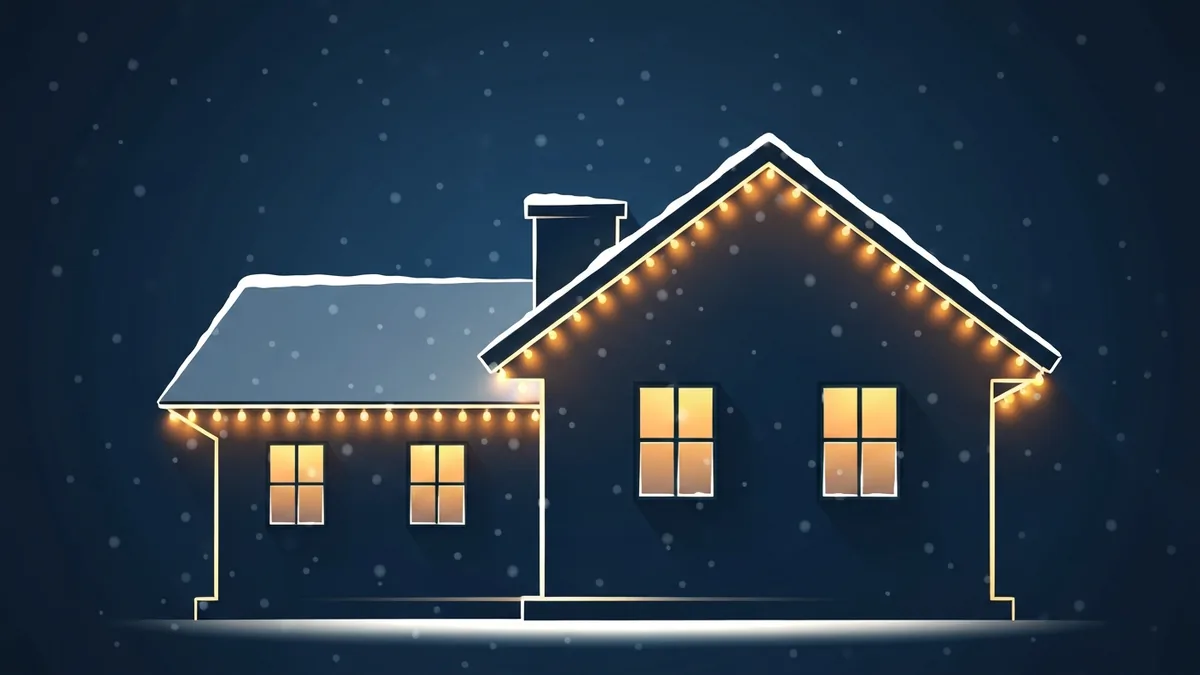
The honest version of this question is really two questions in one. First: will a permanent outdoor LED system actually survive Calgary winters without constant problems? Second: does the cost make sense given how much of the year you will actually use it? Both are worth answering properly, because Calgary winters are not a generic Canadian winter and the answer depends on specifics.
What permanent LED lighting actually involves
A permanent outdoor lighting system is not a set of plug-in string lights left up year-round. The components are a different category entirely. At the Lumen standard that Summit Outdoor Lighting installs, the fixtures are sealed LED units mounted in a low-profile aluminum channel that runs along your roofline, eaves, and fascia. The wiring is weatherproof and runs inside the soffit where it is protected from direct exposure. The whole system is rated to minus 40 degrees Celsius, which is not a marketing figure but a spec that reflects what Alberta winters actually look like.
The controller connects to your home network, and the Lumen app handles scheduling, colour selection, and scene setting. Once the system is in, there is nothing to put away, nothing to store, and nothing to replace until the fixtures themselves eventually wear out, which at normal residential use rates is measured in years, not seasons.
How Calgary’s weather actually tests outdoor lighting
Calgary gets cold, but the bigger challenge is how fast the temperature moves. A chinook system coming off the Rockies can push temperatures up 25 degrees Celsius in a few hours, then drop them again once the warm air dissipates. That cycle repeats multiple times through a typical winter. For outdoor products, this freeze-thaw cycling is more damaging than steady cold, because the expansion and contraction of materials over repeated rapid swings stresses seals, connectors, and mounting hardware in ways that a stable cold climate does not.
Temporary string lights, even the commercial-grade ones rental companies use, are not built to handle this. Most are rated for cold weather storage, not for repeated cycling while powered and installed. That is why homeowners who have tried high-quality temporary lights still end up with failures and dead sections by February.
Snow loading matters too. Calgary gets significant snowfall in some winters, and wet, heavy snow in the late spring and early fall. A permanent system mounted flush against the fascia sits below the eave drip line, so snow falling off the roof passes in front of the fixture channel rather than landing directly on it. The flush mount is not just aesthetic. It is part of why the system holds up when temporary products fail.
Calgary also sits near the top of Canadian cities for annual hours of sunshine, including high UV index days even in winter when snow reflection intensifies the exposure. UV degrades outdoor plastics and cheaper fixture housings over time, fading colours and making seals brittle. This matters more over a five to ten year horizon than it does in year one, but it is a real factor in long-term performance.
The year-round use case most people underestimate
Before installing, most homeowners picture using the lights for Christmas and maybe a few other occasions. What tends to happen in practice is quite different. Calgary’s event calendar is full of reasons to light up a house, and the Lumen app makes it easy enough that the barrier to switching scenes essentially disappears.
Hockey season in Calgary runs October through April. The Flames schedule gives you roughly 40 home games in that window, and the system can be set to switch to red and white on game nights automatically. The Stampeders season covers summer and fall. Canada Day, Halloween, and Remembrance Day are all dates when permanent lights see heavy use in this city.
Beyond specific occasions, Calgary evenings in summer and fall get dark early by September, and homeowners report using the lights as ambient front-yard lighting from dusk onward, something more pleasant than a porch bulb and more energy-efficient than floodlights. The security angle is real too. A home that is visibly lit on a regular basis looks occupied in a way a dark exterior does not.
The practical implication is that a system installed here tends to run for most of the year, not just a six-week holiday window. That changes how the cost works out over time compared to a city where outdoor lighting is genuinely seasonal.
Does the cost make sense given Calgary’s climate?
This depends on what you are comparing it to. If the comparison is to renting lights annually, renting a comparable display typically runs $500 to $1,200 per season in the Calgary area depending on coverage, and that cost is gone at the end of each year with nothing to show for it. Over five to seven years, the cumulative cost of renting approaches or exceeds what a permanent system costs to install, and the permanent system is still there at the end.
If the comparison is to doing nothing, the value comes from what the system adds to how the home looks and feels rather than from cost avoidance. That is a judgment call every homeowner makes for themselves.
For realistic numbers on what installation costs in Calgary, the full price guide for Calgary homeowners covers the ranges in detail. The short version is that smaller homes typically land between $2,500 and $4,500, mid-size two-storeys between $4,500 and $7,500, and larger or more complex properties can go higher depending on linear footage and roofline detail. Those numbers do not mean much until someone measures your specific home, but they give you a reasonable sense of whether the conversation is worth having.
Snow, ice, and maintenance realities
One concern that comes up regularly is ice. Calgary gets ice storms occasionally, and freezing rain can coat exposed surfaces with a layer of ice overnight. The flush-mounted fixture channel handles this better than exposed string lights because there is no dangling hardware to accumulate ice and pull loose. The sealed units themselves are not damaged by ice forming around the exterior.
Icicles form on Calgary eaves for the same reason they always have: heat loss from the attic melting snow that refreezes at the cold edge of the roofline. That is a roof insulation issue, not a lighting issue, and a permanent LED system does not meaningfully affect it in either direction.
Snow falling off a roof can occasionally knock loose temporary lights if they are clipped to the eave edge. A properly installed permanent system is mounted further back and flush, so the same snow slide passes over it. It is not immune to every possible mechanical impact, but the failure mode of snow slide is much less common with a permanent install than with clipped seasonal lights.
Ongoing maintenance for a permanent system in Calgary is minimal. The fixtures do not need seasonal removal, storage, or reinstallation. If a section fails, which is uncommon but happens, the sealed channel design makes individual section replacement straightforward.
Which Calgary homes tend to see the most value
Homes in Calgary’s newer communities, places like Livingston, Seton, Mahogany, and Legacy, tend to be clean two-storeys with consistent rooflines and accessible soffits. They are among the most cost-effective to install and the finished result tends to be visually strong because the architecture is designed with clean lines.
Older neighbourhoods like Brentwood, Hawkwood, and McKenzie Towne have more varied home styles. Bungalows in these areas usually have less linear footage, which pulls the installed cost down. Larger homes with more architectural detail in communities like Springbank, Bearspaw, or Elbow Valley have more footage to cover and cost accordingly, but the end result on a more complex roofline can be particularly striking.
For Calgary homeowners deciding whether to go ahead, the pattern that comes up repeatedly is that the decision becomes clear once someone walks the property and provides an actual number. Until then, it is an abstract comparison. With a real quote in hand, most homeowners either see that it fits comfortably or decide the scope is not right for them right now. Either outcome is a useful one.
A practical way to think through it
If you are mostly thinking about December, a permanent system is probably more than you need. If you are thinking about a system that is useful from October through April for weather-related occasions, through the summer for accent and ambient lighting, and year-round as a low-effort security presence, the math and the experience both tend to hold up well in Calgary’s specific climate.
The climate here is harder on outdoor equipment than most Canadian cities, but it is also the climate that a Lumen-grade system is built for. Whether it makes sense for your home comes down to your specific footprint and what you would actually use it for. A free quote removes the guesswork and gives you a real number to work from.